
A single stone is never just a simple choice; it is a profound declaration that demands absolute perfection in every facet. You might worry that choosing a solitaire engagement ring feels predictable or lacks the personal flair your story deserves, especially when the high street offers so many generic repetitions. It's natural to feel overwhelmed by technical talk of clarity versus carat weight, or to worry about the ethical origins of the gemstones that will represent your future together.
We understand that you're looking for more than just a piece of jewellery; you're seeking a legacy that will be cherished for generations. Discover why the solitaire remains the ultimate symbol of singular devotion and how a bespoke commission transforms this classic design into a unique family heirloom. This guide explores the most elegant trends for 2026, from the resurgence of bold bezel settings to the timeless warmth of 18ct yellow gold. We will walk through the collaborative design process together, giving you the confidence to select a natural gemstone that is as rare and intentional as the love it celebrates.
Key Takeaways
- Understand why the solitaire engagement ring remains the most powerful symbol of singular devotion, representing a unique life-changing commitment through its focused design.
- Discover how bespoke architectural choices, such as the distinction between delicate claws and contemporary rub-over settings, define the character and longevity of your piece.
- Learn about the enduring value of natural, earth-mined gemstones and how their billion-year history serves as a poetic metaphor for a lasting legacy.
- Explore the collaborative journey of a bespoke commission, where your personal narrative is woven into the metal and stone through expert guidance and artisanal craftsmanship.
- Gain insight into the 2026 trends that elevate the classic silhouette, including the resurgence of 18ct yellow gold and the art of transforming inherited stones into modern heirlooms.
Defining the Solitaire Engagement Ring: A Singular Focus on Love
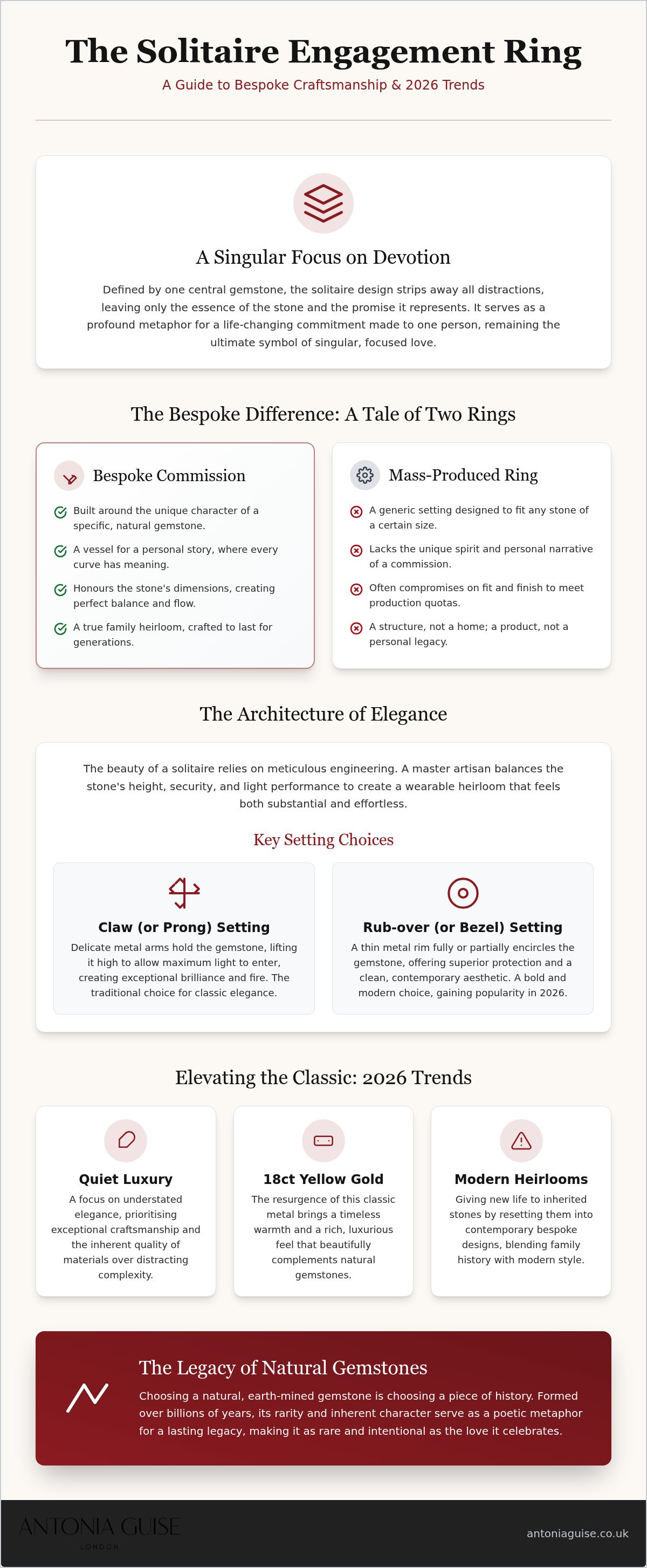
In the quiet language of fine jewellery, few designs carry the weight of a single, unadorned gemstone. A solitaire engagement ring is defined by this intentional focus, where one central stone is held in place to command the viewer's entire attention. It's a silhouette that strips away the noise, leaving only the essence of the stone and the promise it represents. This singularity isn't accidental; it serves as a profound metaphor for a life-changing commitment made to just one person. For over a century, this design has remained the gold standard for proposals because it refuses to hide behind complex patterns, relying instead on the inherent quality of the materials and the skill of the artisan.
Whilst mass-produced versions of this classic style fill shop windows across the country, they often lack the unique spirit that a bespoke engagement ring provides. A generic setting is designed to fit any stone, but a commissioned solitaire is built around the specific character of a natural gemstone. It's the difference between a house and a home; one is a structure, the other is a vessel for a personal story. When you choose a bespoke path, every curve of the metal is considered to honour the stone's unique dimensions, ensuring the ring feels like a natural extension of the wearer's identity.
The History of the Single-Stone Setting
The history of the engagement ring reveals that the desire for a lasting symbol of devotion is ancient. From the iron bands of Rome to the 19th-century discovery of diamonds in South Africa, the single-stone setting has evolved into the pinnacle of romantic expression. The introduction of the 'Tiffany' setting in 1886 changed the landscape forever, lifting the stone above the band to allow light to flood through it. This innovation remains a cornerstone of contemporary design, influencing how we craft modern heirlooms that feel both fresh and deeply rooted in heritage.
Why the Solitaire Endures in 2026
As we move through 2026, the trend towards 'quiet luxury' has solidified the solitaire's place at the top of the jewellery world. In an era of fast fashion, there's a deep yearning for understated elegance. The simplicity of a single stone allows the natural fire of an earth-mined diamond or sapphire to speak without distraction. This versatility makes it the perfect companion for more intricate pieces, such as bespoke art deco engagement rings, allowing for a bridal stack that feels curated and personal. It's a design that doesn't shout to be heard, yet it's impossible to ignore.
The Architecture of Elegance: Anatomy of a Bespoke Solitaire
While a solitaire engagement ring may appear effortless, its beauty relies on a meticulous architectural foundation that remains hidden to the untrained eye. In a high-end bespoke commission, the design is an exercise in engineering as much as artistry. A master artisan doesn't simply place a stone on a band; they curate a structural flow where the metal serves to elevate, rather than overwhelm, the natural gemstone. This involves a delicate balance of the stone’s height. Set it too low, and you lose the play of light that creates fire; set it too high, and the ring becomes impractical for the rhythms of daily life. The goal is a piece that feels weightless yet substantial, a physical manifestation of a promise that stands the test of time.
One of the most vital, yet often overlooked, elements is the gallery. This is the view of the ring from the side, a secret perspective known primarily to the wearer. In a bespoke piece, the gallery can be personalised with subtle flourishes, perhaps a hidden curve or a specific metal finish, that wouldn't be possible in mass-produced jewellery. As GIA explains a solitaire setting, the way a stone is mounted dictates both its security and its brilliance. By carefully considering these structural details, we ensure that the ring remains a comfortable, wearable heirloom for decades to come.
The Setting: Claws, Collets, and Cups
The choice between claws and a rub-over setting completely transforms the character of a solitaire engagement ring. A classic four-claw setting offers a traditional, airy aesthetic, allowing maximum light entry to enhance the stone's natural sparkle. Conversely, a six-claw setting provides a rounder silhouette and added security for larger stones. For those seeking a contemporary edge, the rub-over, or bezel, setting is seeing a major resurgence in 2026. This style encircles the stone in a thin collar of gold or platinum, creating a sleek, snag-free profile that protects the gemstone's edges whilst offering a bold, modern look.
Band Width and Profile
The band is the anchor of your story, and its profile dramatically influences the visual impact of the centre stone. A 'knife-edge' band, with its sloped sides meeting at a central point, creates an optical illusion that makes the gemstone appear larger and more prominent. For a more architectural statement, wider flat bands, often referred to as 'cigar bands', provide a substantial and grounded feel. It is also essential to ensure the band is 'wed-fit', meaning it is designed to sit flush against a future wedding ring without a gap. If you are beginning your journey toward a custom piece, you might find inspiration in our approach to bespoke jewellery design, where we prioritise these intentional, technical details to create something truly singular.
The Rarity of Nature: Why Natural Diamonds Define the Solitaire Legacy
To choose a natural gemstone is to embrace a piece of Earth's history that predates humanity itself. These stones, forged under immense heat and pressure over billions of years, represent the profound concept of geological time. It is a poetic mirror for a lifelong commitment; a love that, like the stone, has been refined until it is unbreakable. At Antonia Guise, we exclusively source natural, earth-mined gemstones for every solitaire engagement ring commission because we believe a symbol of devotion should be as rare and enduring as the promise it keeps. A stone that has existed for eons carries a weight of sentiment that a factory-made alternative simply cannot replicate.
In the modern British market, the distinction between natural and lab-grown stones is often blurred by marketing that prioritises immediate cost over long-term character. Whilst lab-created stones might mimic the appearance of a diamond, they lack the finite rarity that defines a true heirloom. A natural stone is a finite resource; it is a literal miracle of nature that cannot be manufactured on demand. This inherent scarcity ensures that your piece maintains its essence and emotional value as it is passed down through the chapters of your family's history. We focus on ethical sourcing from trusted suppliers, ensuring that the journey from the earth to your hand is one of integrity and respect.
Natural vs. Lab-Grown: The Value of Rarity
Owning a natural gemstone means possessing something entirely unique. No two stones are identical, even if they share the same grading. The tiny natural inclusions found within, often described as nature's fingerprints, aren't flaws but rather a testament to the stone's authentic journey through time. These characteristics add a layer of narrative to a bespoke piece that mass-produced alternatives lack. When you look into the heart of a natural diamond, you're seeing a unique composition of light and history that belongs to you alone. It's a connection to the physical world that feels grounded and real.
Selecting a Stone for a Solitaire
In a design with a single focal point, the quality of the stone's cut becomes the most critical factor. A masterfully cut stone handles light with precision, creating the fire and brilliance that a solitaire engagement ring is famous for. Whilst diamonds are the traditional choice, many couples are now exploring the deep hues of a sapphire or the romantic, rounded edges of a cushion cut engagement ring for a more personal touch. Regardless of the stone chosen, we rely on GIA certification to provide you with absolute peace of mind regarding the technical specifications of your selection. This rigorous verification ensures your commission is grounded in both beauty and artisanal excellence.
Personalising Your Narrative: Choosing Settings and Stones for a Custom Commission
Creating a bespoke piece is an intimate dialogue between your personal history and the materials that will carry it forward. It's a collaborative journey where we translate an abstract emotion into a tangible object. A solitaire engagement ring provides the perfect canvas for this expression, as its simplicity allows every deliberate choice, from the metal's hue to the stone's silhouette, to resonate with meaning. We guide you through this process as a trusted partner, ensuring that the final design doesn't just look beautiful but feels like an authentic reflection of your shared story.
The metal you choose provides the emotional landscape upon which your stone will sit. In 2026, we've seen a significant resurgence in the popularity of 18ct yellow gold. Its rich, traditional glow offers a warmth that feels deeply rooted in heritage, making it a favourite for those who value a vintage-inspired aesthetic. Conversely, platinum offers a cool, architectural strength. It's the most durable choice for daily wear and its naturally white finish ensures that a colourless diamond remains perfectly bright without any warm reflections from the setting. For a softer, more romantic narrative, rose gold provides a delicate blush that feels both contemporary and timeless.
Metal Choices: 18ct Gold and Platinum
Whilst 18ct yellow gold is celebrated for its sun-drenched character, platinum remains the gold standard for those prioritising longevity. Platinum's density means it doesn't wear away over decades; instead, the metal merely shifts, developing a unique patina of age that many find charming. If you prefer a consistent, high-shine finish, 18ct white gold is a versatile alternative, though it requires occasional re-plating to maintain its crisp, silvery appearance. Each choice carries its own weight and texture, influencing how the ring sits against the skin and interacts with the wearer's daily life.
Stone Shapes: From Round Brilliant to Fancy Cuts
The shape of your natural gemstone should complement the unique proportions of the wearer's hand. The Round Brilliant remains the most classic solitaire choice for its unmatched fire and ability to hide minor inclusions. However, elongated shapes like the Oval or Pear cut are increasingly sought after in 2026 for their ability to flatter the finger, creating a sense of length and elegance. For those who prefer a sophisticated, understated glow over traditional sparkle, the Emerald cut offers a 'hall of mirrors' effect. This step-cut shape requires a stone of exceptional clarity, as its large, open facets invite the eye to look deep into the heart of the gem.
Personalisation often lives in the details that only the two of you know exist. We often encourage the inclusion of 'hidden' elements, such as a small birthstone or a meaningful engraving tucked inside the band. These secret chapters transform the ring from a public statement into a private heirloom. If you're ready to begin your own creative journey, we invite you to explore our bespoke jewellery design service to see how we can bring your vision to life.
Creating Your Forever Story: The Antonia Guise Bespoke Experience
At Antonia Guise, we believe that jewellery is the physical manifestation of your most cherished memories. Our philosophy of 'Visionary Storytelling' ensures that every solitaire engagement ring we create is more than just a beautiful object; it is a vessel for your unique narrative. We reject the hurried pace of modern retail, opting instead for a methodical, unhurried journey that honours the emotional weight of your decision. By supporting independent British craftsmanship, we ensure that your piece is crafted with a level of intentionality that mass-production can never achieve. This is a shared creative journey, where you are an active participant in the birth of a future heirloom.
The process is designed to be as memorable as the proposal itself. We treat every project as a shared emotional milestone, providing expert guidance while leaving space for your personal intuition to lead the way. Whether we are starting with a blank page or reimagining a piece of your family's history, the focus remains on the profound connection between the physical object and the person who will wear it for a lifetime.
The Bespoke Journey: Step-by-Step
- The Initial Consultation: We begin with a conversation rather than a catalogue. This is your opportunity to share the inspirations, stories, and specific 'chapters' of your life that you wish to immortalise in metal and stone.
- The Stone Sourcing: We meticulously search for the one natural gem that 'speaks' to your unique story. We present a curated selection of stones, each with its own character, allowing you to choose the one that resonates most deeply.
- The Final Reveal: The journey concludes with the unveiling of a masterpiece. This is a milestone celebration piece that carries the weight of your family's future history, ready to be worn and loved for generations.
Heirloom Transformation: New Life for Old Stories
One of our most sentimental services is the transformation of inherited jewellery into a contemporary solitaire engagement ring. Many of our clients come to us with a grandmother's diamond or a family sapphire that holds immense emotional value but perhaps sits in a setting that doesn't align with their modern life. We specialise in repurposing these precious stones, carefully extracting them from their original mounts to place them at the centre of a new, bespoke design.
This process is about more than just a style update; it is about preserving the 'spirit' of the original piece whilst ensuring its structural integrity for the next century. By breathing new life into an inherited stone, we bridge the gap between your past and your future. It allows you to carry your family's legacy with you every day, housed in a design that is uniquely yours. This artisanal approach ensures that the story continues, evolving with you as you begin this new chapter of your own history.
Crafting Your Personal Heritage
The journey to finding the perfect solitaire engagement ring is a rare opportunity to define a new chapter in your family's history. It's about more than simply selecting a stone; it's about intentionality and the profound beauty of a well-told tale. By choosing a bespoke path, you ensure that every technical detail, from the gallery's hidden curves to the band's profile, is engineered to honour your specific narrative. Whether you're drawn to the sun-drenched warmth of 18ct yellow gold or the architectural strength of platinum, your ring becomes a physical anchor for your most significant life milestone.
We invite you to experience a collaborative design process that places your vision at the heart of every sketch. Our commitment to exclusively natural gemstones ensures your piece carries the weight of geological history, whilst our role as a specialist in heirloom transformations allows you to weave ancestral stories into your modern life. Your story is unique, and the vessel that carries it should be just as singular. It's time to transform your vision into a reality that will be cherished for generations to come.
Begin your bespoke story with Antonia Guise
Frequently Asked Questions
What is the best metal for a solitaire engagement ring?
The best metal for your commission depends on your lifestyle and aesthetic preference, though 18ct yellow gold and platinum remain the most enduring choices. Platinum is favoured for its exceptional durability and its ability to maintain a bright, colourless appearance without reflecting warm tones into the diamond. Conversely, 18ct yellow gold offers a rich, traditional glow that feels deeply rooted in heritage, making it a popular choice for those seeking a vintage-inspired look.
Is a solitaire ring more expensive than a halo ring?
A solitaire ring is often more cost-effective than a halo design because it requires less intricate metalwork and fewer small accent stones, though the final cost is dictated by the quality of the central gemstone. In this design, your investment is focused entirely on a single, high-quality stone rather than being distributed amongst many smaller diamonds. This makes it an excellent choice for those who value the singular fire and clarity of a primary natural gemstone.
Can I use an inherited diamond for a bespoke solitaire commission?
Yes, we specialise in heirloom transformations and frequently use inherited diamonds to create a bespoke solitaire engagement ring. This process involves carefully assessing your family stone before designing a contemporary setting that honours its history whilst ensuring it is structurally sound for daily wear. It's a beautiful way to carry a piece of your family's past into your future together.
How do I choose the right diamond size for a simple solitaire band?
Choosing the right size is a matter of proportion and balance between the stone and the wearer's hand. For a simple band, a stone that occupies roughly one-third of the finger's width often creates a harmonious look. We work closely with you during the design process to ensure the stone size feels substantial without overwhelming the delicate architecture of the band itself.
Why does Antonia Guise only use natural gemstones for engagement rings?
We exclusively use natural gemstones because they possess a finite rarity and a connection to geological time that lab-grown stones cannot replicate. A natural diamond formed over billions of years carries a unique spirit and a story of endurance that mirrors a lifelong commitment. These stones maintain their essence and emotional value over generations, making them the only choice for a true family heirloom.
How long does a bespoke solitaire commission typically take?
A bespoke commission typically takes between eight and twelve weeks from the initial consultation to the final reveal. This unhurried pace allows for the careful sourcing of the perfect natural gemstone and the meticulous handcrafted production of the setting. We prioritise this methodical approach to ensure that every facet of your ring meets our exacting standards of artisanal excellence.
Is a four-claw or six-claw setting better for a solitaire diamond?
A four-claw setting is ideal for maximum light entry and a classic, airy look, whilst a six-claw setting provides enhanced security and a rounder silhouette. Four claws can make a diamond appear more square or rectangular, which suits certain cuts perfectly. Six claws offer extra protection for the stone's edges and are often recommended for larger centre stones to ensure they remain safe for decades.
What are the most popular diamond shapes for a solitaire ring in 2026?
In 2026, elongated shapes such as oval, pear, and emerald cuts have become the most sought-after choices for a solitaire engagement ring. Ovals and pears are favoured for their ability to flatter the finger by creating a sense of length and elegance. Emerald cuts are popular amongst those who prefer a sophisticated, understated glow and an 'hall of mirrors' aesthetic over the traditional sparkle of a round brilliant.