
Imagine standing amongst the glimmering halls of 18th-century Versailles, where King Louis XV sought to capture the perfect curve of his lover's smile in a single, shimmering stone. This romantic origin gave birth to the marquise diamond, a silhouette that remains one of the most distinctive and soul-stirring choices for a bespoke commission today. It is a shape that carries the weight of history whilst offering a bold, contemporary profile for the modern wearer.
You likely appreciate the way its elongated form creates an illusion of length and grace on the hand, yet you might hesitate over concerns about fragile points or the shadowed "bow-tie" effect. It's natural to worry that such a historic shape could feel like a relic rather than a modern masterpiece. We believe that choosing a stone is a deeply personal chapter in your story, where your vision for a unique legacy should be met with expert reassurance and artisanal care.
This guide explores the rich heritage of this royal cut whilst addressing the technical nuances of selecting a high-quality stone. You'll discover how intentional, bespoke design can protect those delicate tips and how a thoughtful heirloom transformation can turn a storied gem into a contemporary treasure that reflects your own identity.
Key Takeaways
- Uncover the romantic history of the marquise diamond, tracing its elegant silhouette back to the 18th-century French court.
- Learn to navigate technical nuances like the bow-tie effect to ensure your stone possesses exceptional sparkle and balance.
- Discover why this elongated cut provides a superior visual impact, often appearing larger on the hand than other diamond shapes of the same weight.
- Explore how bespoke design elements, such as V-prongs, provide essential protection for the stone's delicate points whilst enhancing its royal profile.
- Understand the process of heirloom transformation, turning a forgotten family gem into a meaningful, modern piece of jewellery.
The Romantic Legacy of the Marquise Cut
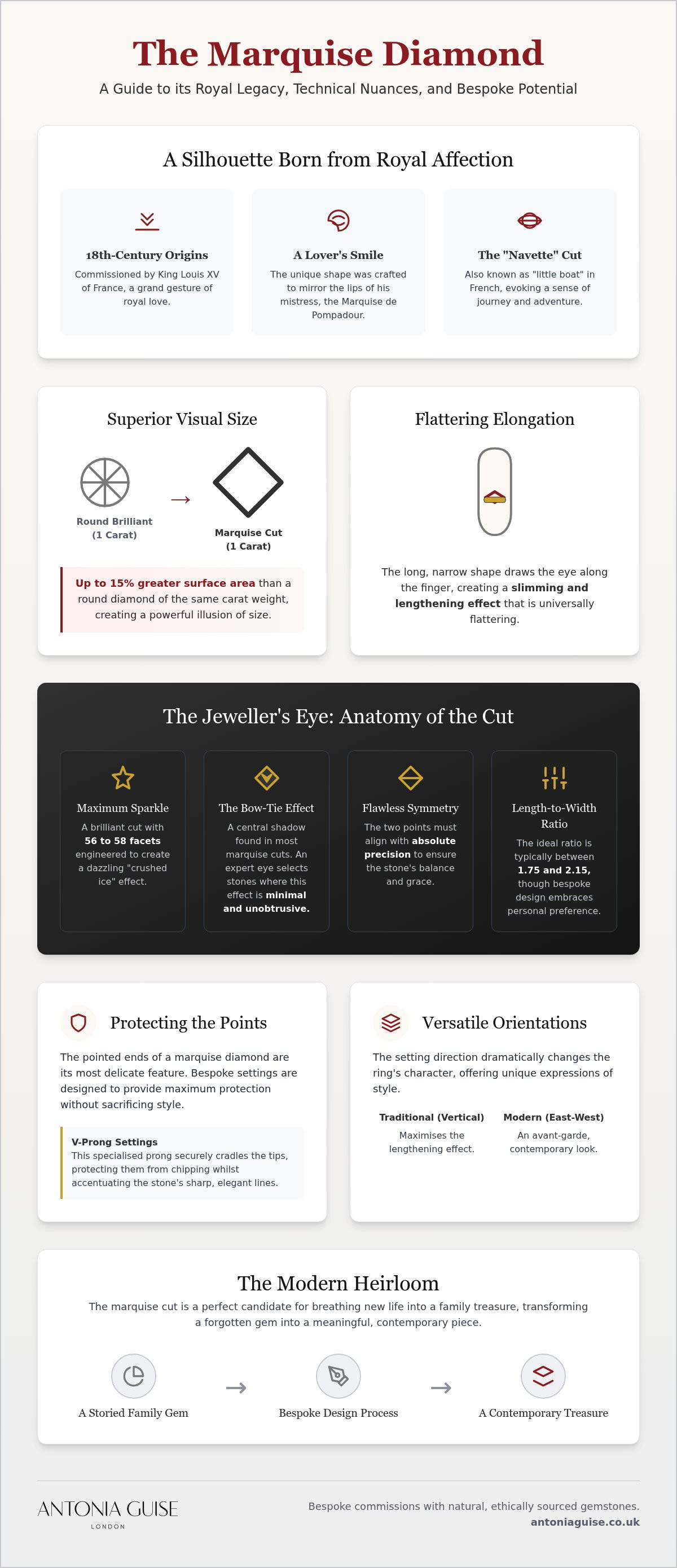
The marquise diamond is a silhouette born from a whisper of scandal and a grand gesture of royal affection. Defined by its elongated, elliptical body and two distinctive pointed ends, it is a shape that refuses to be ignored. Its history dates back to 18th-century France, specifically to the opulent court of King Louis XV. Legend tells us the King commissioned a diamond to be cut in the likeness of the perfectly shaped lips of his mistress, Jean Antoinette Poisson, the Marquise de Pompadour. This royal heritage bestows a poetic weight upon the stone, making it a favourite for those who view jewellery as a vessel for personal storytelling and romantic legacy.
In the world of artisanal jewellery, this cut is often referred to as "navette," a French term meaning "little boat." It's a charming descriptor that evokes a sense of journey, adventure, and the passage of time. Whether you see it as a pair of smiling lips or a vessel set for a new chapter in life, the marquise carries a bold aesthetic that feels both vintage-inspired and refreshingly modern. It's a choice for the visionary who wants a ring that stands apart from the sea of traditional rounds and cushions.
A Silhouette That Flatters and Elongates
One of the most compelling reasons to choose a marquise diamond for a bespoke commission is its remarkable visual presence. Due to its long, narrow shape, it often appears significantly larger than a round brilliant stone of the same carat weight. Verified data suggests it can offer a visual surface area up to 15% greater than its circular counterparts. This "illusion" of size is paired with a physical benefit for the wearer; the elongated points draw the eye along the finger, creating a slimming and lengthening effect that is universally flattering.
Whilst traditionally set vertically to maximise this lengthening effect, we're seeing a beautiful shift towards "East-West" orientations. Setting the stone horizontally across the band offers a contemporary, avant-garde look that still honours the stone's classic roots. This versatility allows the wearer to express their individuality whilst maintaining a connection to a timeless craft.
The Distinction of Natural Marquise Diamonds
At Antonia Guise, we focus exclusively on natural gemstones, as they carry a unique geological history that cannot be replicated. Amongst popular fancy cuts, the marquise requires an expert eye to source. Finding a natural stone with the perfect length-to-width ratio is an artisanal challenge. We prioritise stones that tell a story of ethical integrity and enduring value, ensuring that every piece we create is a true original.
Choosing a natural marquise diamond isn't just about the immediate sparkle; it's about investing in a future heirloom. These stones are the perfect candidates for heirloom jewellery transformations, as their distinctive shape ensures they remain a focal point through every chapter of a family's history. Our collaborative design process ensures that each stone is selected not just for its technical specifications, but for its spirit and soul.
Understanding the Anatomy: Sparkle, Proportions, and the Bow-Tie Effect
To truly appreciate a marquise diamond, one must look beyond its surface and into the intricate dance of light within. As a member of the brilliant-cut family, this stone is engineered for maximum radiance. Its typical structure of 56 to 58 facets creates a "crushed ice" effect, where light bounces through the pavilion to produce a shimmering, multifaceted glow. This internal fire is what gives the stone its life, turning a physical object into a sparkling narrative of light and shadow.
One characteristic that often concerns those new to this silhouette is the "bow-tie effect." This is a dark, butterfly-shaped shadow that can appear across the centre of the stone when light passes through the diamond rather than reflecting back to the eye. Whilst almost every marquise diamond possesses a whisper of this shadow, the secret lies in careful selection. A master jeweller prioritises stones where the bow-tie is minimal, ensuring the heart of the diamond remains bright and uninterrupted. Symmetry is equally vital; the two points must align with absolute precision. If the points are even slightly skewed, the stone loses its sense of balance and grace.
The Importance of the Length-to-Width Ratio
Industry standards often suggest an "ideal" ratio between 1.75 and 2.15, but bespoke design allows us to move beyond rigid rules. A "chubby" marquise with a lower ratio feels soft, approachable, and romantic. Conversely, a "slender" stone or an ultra-elongated ratio of 2.25 and higher offers a sharp, avant-garde aesthetic. The ratio you choose dictates the spirit of the ring, influencing whether the final piece feels like a delicate vintage treasure or a bold, high-fashion statement. If you feel unsure about navigating these technical nuances alone, a collaborative design journey can help you find a stone that perfectly balances technical excellence with your personal vision.
Point Protection and Durability
The points of a marquise are its most defining feature, yet they are also its most vulnerable. These delicate tips can be prone to chipping if they aren't treated with reverence. During the sourcing process, it's essential to ensure the stone is "clear" of inclusions near the points, as internal flaws at the extremities can compromise the diamond's structural integrity. Reassurance comes through expert craftsmanship; by using intentional setting techniques, we can transform these vulnerable edges into a durable, resilient choice for daily wear, ensuring your diamond remains as timeless as the story it represents.
Selecting Your Stone: Comparing Silhouettes and Visual Impact
Choosing a diamond is an act of finding a physical mirror for an internal story. Whilst the classic round brilliant is a symbol of timelessness, elongated shapes offer a more nuanced narrative of grace and individuality. Within this category, the marquise diamond stands as a bold choice for those who appreciate architectural lines. Historically, the navette cut served as the refined precursor to the modern marquise diamond, acting as a bridge between antique craftsmanship and the precise brilliance we admire today. When selecting your stone, it's essential to remember that elongated cuts behave differently than round ones. Colour tends to concentrate near the pointed tips, whilst the broad table can make certain inclusions more visible, requiring a discerning eye during the sourcing phase.
Marquise vs. Oval: A Study in Softness and Edge
The choice between an oval and a marquise often comes down to the desired "energy" of the piece. An oval cut offers soft, rounded ends that feel gentle and traditional. In contrast, the marquise provides sharp, architectural points that feel decisive and avant-garde. For those with shorter fingers or smaller hands, the dramatic length of the marquise creates a powerful slimming effect that an oval cannot quite match. Whilst both shapes offer excellent light return, the marquise often possesses a more complex, directional sparkle. It's a silhouette for the wearer who isn't afraid of a little edge in their elegance.
Carat Weight vs. Visual Presence
One of the most practical advantages of this silhouette is its "face-up" size. Because the marquise is long and relatively shallow, it spreads its weight across a larger surface area. A 1-carat marquise diamond can appear up to 15% larger than a 1-carat round brilliant, giving it a presence that far exceeds its technical weight. This visual trick is a gift for bespoke commissions. It allows us to design a ring with significant impact whilst remaining intentional with a client's budget.
However, this visual spread must be balanced with technical precision. A stone that is too shallow may look vast, but it will lose its internal fire and appear "glassy." Conversely, a stone that is too deep hides its weight where it cannot be seen, sacrificing the very visual advantage the shape is known for. We look for that perfect depth percentage that ensures the diamond dances with light whilst occupying the space it deserves on the hand. This careful calibration is what transforms a simple stone into a captivating centrepiece for a milestone celebration.
Bespoke Design: Protecting and Enhancing the Marquise Silhouette
Designing a ring is a collaborative act of storytelling. When you choose a marquise diamond, you are selecting a silhouette that demands both technical precision and artistic vision. We work closely with you to ensure the setting does more than just secure the stone; it must embrace its character. This partnership ensures that every design choice, from the depth of the prongs to the curve of the band, is made with intentionality and heart. Our goal is to transform your abstract emotional vision into a concrete, wearable reality.
Protection is often the first concern for this elegant shape. The V-prong is the undisputed gold standard, providing a protective "V" of metal that shields the vulnerable points from impact without diminishing the stone's internal fire. For a more avant-garde look, the East-West setting is gaining popularity, turning the stone horizontally to create a low-profile, modern aesthetic. If you wish to play with light, a halo setting can be used to either soften the sharp architectural lines of the stone or accentuate its impressive visual presence on the hand.
Artisanal Setting Techniques
For those who lead an active life, the bezel or "rub-over" setting offers a sleek and highly protective finish. By encircling the marquise diamond in a thin wall of precious metal, we create a snag-free design that feels incredibly secure whilst maintaining a contemporary edge. Another beautiful option is the Trilogy setting, where the marquise is flanked by two side stones. This arrangement creates a powerful narrative of a couple’s past, present, and future chapters. To understand how these settings fit into the broader history of jewellery, explore our guide to the evolution of engagement ring designs.
Choosing the Right Metal for Your Story
The choice of metal significantly influences the "spirit" of the piece. 18ct yellow gold provides a rich, vintage warmth that feels deeply connected to the stone’s 18th-century origins. Conversely, platinum offers a cool, crisp modernity that allows the natural diamond’s brilliance to take centre stage. We often suggest mixed metals for those who want to highlight specific facets of a design or bridge the gap between different eras. Every piece is handcrafted using traditional British artisanal techniques, ensuring that your ring is not just a commercial item, but a modern heirloom. To begin your own design journey, explore our bespoke engagement ring services.
Breathing New Life: Transforming Marquise Heirlooms into Modern Treasures
Many marquise diamonds wait patiently in velvet-lined boxes, held in family vaults but rarely worn because their original settings feel like relics of a different era. These stones are often the shimmering centrepieces of vintage jewellery, carrying the weight of decades within their facets. Repurposing history is a deeply emotional process; it requires a delicate balance of reverence for the past and vision for the future. By dismantling an old-fashioned ring, we can release the stone from its heavy, dated frame and prepare it for a fresh narrative. Jewellery remodelling is the bridge between ancestral legacy and personal identity, ensuring that a family’s story continues to be told through a lens that feels authentically yours.
The Transformation Process
Our journey begins with a quiet, intentional consultation where we discuss the essence of your heirloom. We want to understand the chapters of life this stone has already witnessed before we begin its next one. This is followed by a rigorous technical assessment where we examine the marquise diamond for any wear or microscopic chips, particularly at those vulnerable points we discussed earlier. This step ensures the stone’s structural integrity is sound before the creative work begins. To learn more about how we navigate these delicate projects, you can explore our comprehensive guide to Jewellery Remodelling: A Guide to Transforming Heirloom Stories in 2026.
Creating a New Milestone
A repurposed marquise diamond is a beautiful candidate for a bespoke engagement ring or a piece of milestone celebration jewellery. There is a profound sustainability in using a natural stone that already exists within your family history. It avoids the need for new mining whilst deepening the sentimental value of the final piece. Whether we set it in a modern East-West orientation or a protective bezel, the result is a one-of-a-kind treasure that feels both ancient and brand new. We invite you to begin your own collaborative journey with us, transforming a family legacy into a modern heirloom that reflects your unique spirit. This process turns a forgotten object into a daily reminder of love, connection, and the enduring beauty of artisanal craft.
A Legacy Reimagined: Your Chapter in the Marquise Story
The marquise diamond is far more than a technical feat of geometry; it's a silhouette that carries the romantic echoes of 18th-century France into the modern day. By understanding its unique anatomy, from the flattering elongation of its points to the protective necessity of artisanal settings, you can choose a stone that feels both timeless and secure. Whether you're drawn to its royal origins or the sustainable beauty of a repurposed family gem, this cut offers a bold visual impact that few other shapes can match.
Every milestone deserves a piece of jewellery that speaks your truth. Through direct collaboration with our designer and a dedication to traditional British craftsmanship, we help you navigate the nuances of bespoke design. As specialists in heirloom transformations, we turn these storied stones into modern masterpieces that honour your past whilst celebrating your future. We invite you to begin your bespoke journey with Antonia Guise today. Your vision is the heart of our craft, and we're here to ensure your story is told with the elegance and intentionality it deserves.
Frequently Asked Questions
What is the best setting for a marquise diamond ring?
The V-prong setting is widely considered the gold standard for a marquise diamond because it provides essential protection for the vulnerable points whilst allowing maximum light to enter the stone. For those seeking a more modern, snag-free aesthetic, a rub-over or bezel setting is an excellent alternative. These artisanal techniques ensure your stone is secure for daily wear, turning a delicate silhouette into a resilient piece of milestone celebration jewellery.
Do marquise diamonds chip easily?
Whilst the pointed ends of a marquise are more susceptible to chipping than rounded shapes, this risk is mitigated through expert craftsmanship and thoughtful design. Protecting the extremities with metal, such as V-shaped prongs or a full bezel, significantly increases the diamond's durability. We also carefully assess natural stones for inclusions near the tips during the sourcing process, as internal flaws in these areas can weaken the diamond’s structural integrity over time.
Is a marquise diamond more expensive than a round diamond?
Generally, a marquise cut is less expensive than a round brilliant diamond of the same carat weight and quality. This is largely due to the higher demand for round stones and the way a marquise is cut from the raw crystal. Beyond the price per carat, the elongated shape offers a visual size advantage, often appearing up to 15% larger than a round stone, allowing you to achieve a more dramatic presence within your budget.
What is the bow-tie effect in marquise diamonds?
The bow-tie effect is a dark, butterfly-shaped shadow that appears across the centre of the stone when light is not reflected back to the eye. Most elongated cuts possess some degree of this shadow; however, it shouldn't detract from the diamond's overall beauty. We meticulously hand-select every marquise diamond to ensure this effect is minimal and well-dispersed, ensuring the internal fire of your stone remains the focal point of the design.
Can I use an inherited marquise diamond for a new engagement ring?
Repurposing an inherited stone is a beautiful way to honour your family’s legacy whilst creating a piece that reflects your personal identity. We specialise in heirloom jewellery transformations, where we carefully dismantle the original vintage setting and reimagine the stone within a contemporary, bespoke frame. This collaborative process allows you to carry a piece of your history into a new chapter of life, resulting in a truly one-of-a-kind milestone celebration.
What length-to-width ratio should I look for in a marquise stone?
A classic length-to-width ratio for this shape typically falls between 1.75 and 2.15. This range provides the elegant, balanced silhouette most associated with the cut. However, bespoke design encourages individuality; some may prefer a "chubby" marquise with a lower ratio for a softer look, whilst others might choose an ultra-elongated ratio of 2.25 or higher for a high-fashion, avant-garde aesthetic that makes a bold, unique statement on the hand.
Does a marquise diamond make your finger look longer?
The elongated silhouette of the marquise is renowned for its ability to create a slimming and lengthening effect on the wearer’s finger. By drawing the eye vertically along the hand, the stone provides a sense of grace and proportion that is universally flattering. Whether set in a traditional vertical orientation or a contemporary East-West style, the unique geometry of the stone offers a visual elegance that enhances the natural lines of the hand.
Are marquise diamonds still in fashion for 2026?
The marquise cut is experiencing a significant resurgence in 2026, driven by a growing desire for unique, storytelling silhouettes. Recent market data shows it is one of the fastest-growing fancy shapes, with searches for elongated diamonds increasing by 22% this year. Modern trends like East-West orientations and "Toi et Moi" pairings have breathed new life into this royal shape, ensuring it remains a sophisticated and forward-thinking choice for contemporary bespoke commissions.